

To prevent mold on woven baskets during sea freight, suppliers must thoroughly dry the natural fibers, pack products with moisture absorbents, and ensure proper storage before and during transit. Buyers also play a role by verifying supplier practices and maintaining dry conditions in their own warehouses.
Why Handwoven Baskets Get Mold in Shipping Containers
Natural fibers like water hyacinth, seagrass, and rattan are organic materials. If they retain too much moisture when packed, this moisture can condense inside a sealed shipping container, especially during long sea voyages with temperature and humidity fluctuations. This creates an ideal environment for mold spores to grow. Even a small amount of residual moisture can be enough.
The core issue is that natural fibers absorb moisture from the air. If not dried sufficiently, or if exposed to damp conditions after drying, they will take on water. Once packed into a container, this moisture becomes trapped. The container itself acts like a greenhouse, magnifying any internal humidity. This is why knowing how to prevent mold on woven baskets is crucial for any buyer of natural fiber home decor.
Meko Craft’s Approach to Mold Prevention
Our management and production team has over 20 years of experience making handwoven home decor for B2B buyers. We understand the challenges of shipping natural fiber products globally and have developed a strict process to prevent mold.
Drying Procedures
Every product is sun-dried and heat-dried thoroughly to prevent mold. For materials like water hyacinth, we first sun-dry the stalks for 5-7 days until they turn from green to yellow, making the fiber pliable enough to weave. After weaving, shaping, and gluing, we sun-dry or kiln-dry each piece again until its moisture content is below 15%. This final drying is what prevents mold forming inside shipping containers.
Our factory is in Thuan Giao Ward, Ho Chi Minh City, Vietnam, with a 1,000 sqm indoor workshop and a 1,500 sqm outdoor drying yard, allowing us ample space to manage this critical drying process. Any piece that gets wet during production or storage is dried again before packing.
Quality Control and Packing
Quality control runs in three stages: IQC for incoming material, PQC during production, and FQC as the final inspection. Every piece gets a 7-point check before packing. Before packing, we check the moisture of the products with a moisture meter to ensure they meet our standards.
For packing, products are packed in 5-layer (5-ply) corrugated export cartons with silica gel. This helps absorb any residual moisture in the air within the carton. Once the container is loaded, the whole shipment is fumigated before it ships, a required step that kills any insects or eggs and meets the quarantine rules of importing countries.
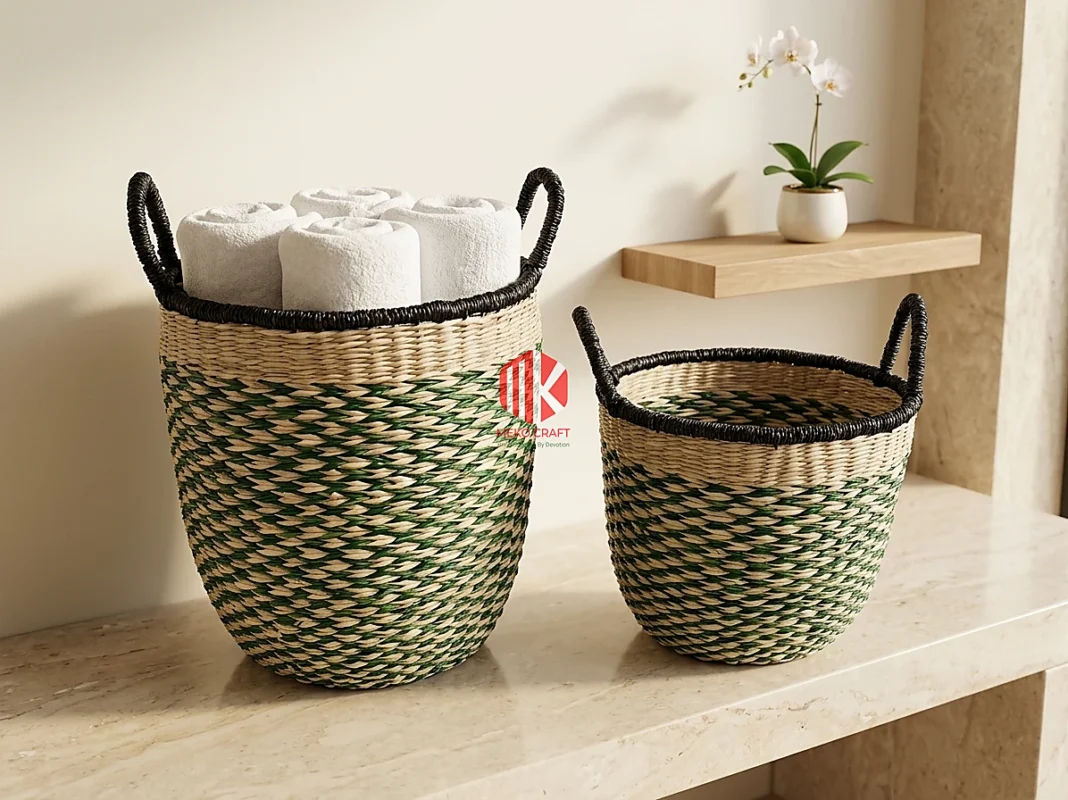
You can see examples of our carefully prepared products, such as our Braided Water Hyacinth Rectangular Storage Basket Set of 3 or Pattern-Woven Seagrass Round Storage Basket Set of 2, which are all processed with these steps in mind.
What Buyers Should Ask Their Suppliers
As a professional buyer, you need to ensure your supplier has robust mold prevention measures. Here are key questions to ask:
- Drying Process: We dry natural fiber products using sun-drying and kiln-drying to reach specific moisture content levels before packing.
- Moisture Measurement: We use a moisture meter to check products before packing and ensure they do not exceed the maximum acceptable reading.
- Packing Materials: We use export-standard cartons and include silica gel packets in each box. The number of packets is determined by the product size.
- Storage Conditions: Finished goods are stored in a dry, well-ventilated area away from dampness before shipment.
- Quality Control: Can you provide details on your quality control process for mold prevention?
- Fumigation: Is fumigation included for all shipments? Will you provide a fumigation certificate? (A phytosanitary certificate is issued when the buyer or the importing country requires it.)
Understanding these details helps you evaluate a supplier’s commitment to delivering mold-free products. You can learn more about our processes on our factory page and find answers to common questions on our FAQ page.
Material Properties and Trade-Offs
Different natural fibers have varying properties that affect their moisture resistance and drying needs. Knowing these helps you choose the right material for your application and understand supplier processes.
| Fiber Type | Key Properties | Mold Prevention Considerations |
|---|---|---|
| Water Hyacinth | Soft, light, ideal for decorative baskets; holds less tension than seagrass. Weave deepens to a honey patina over the first year. | Requires thorough sun-drying and kiln-drying to remove moisture. More susceptible if not dried properly. |
| Seagrass | Tougher and more moisture-resistant than water hyacinth; good for daily handling and carrying. Graded by cord thickness. | Naturally more resistant to moisture, but still requires careful drying to prevent mold during long transit. |
| Rattan | Durable material used for many Storage Baskets like our Fine Woven Rattan Rectangular Storage Basket. | Must be dried completely to prevent mold, similar to other natural fibers. |
The most common issues we design against are mould from moisture and loose weave ends, both solved by thorough drying and carefully finishing the strand tips. Every piece is hand-woven by artisans in Vietnam’s Mekong Delta; small variations between pieces are normal in handweaving, not defects.
What Buyers Should Do in Their Own Warehouse
Your responsibility for mold prevention doesn’t end when the container arrives. Proper handling and storage in your warehouse are just as important.
Receiving and Inspection
- Inspect Upon Arrival: When your FCL or LCL shipment arrives, open cartons in a well-lit area. Look for any signs of dampness, musty odors, or visible mold on the packaging or products.
- Ventilate Immediately: If possible, unpack products and allow them to air out in a dry, well-ventilated space for a few days, especially if they have traveled a long sea voyage.
Storage Best Practices
Buyers should keep the products in a dry place. Here are specific steps:
- Dry Environment: Store natural fiber baskets in a climate-controlled warehouse with stable temperature and humidity. Avoid storing them in basements, near water pipes, or in areas prone to dampness.
- Air Circulation: Do not stack cartons directly against walls or too high without allowing for air circulation. Use pallets to keep products off the floor.
- Handle Wet Products: If a product gets wet in your warehouse, dry it fully in the sun or a warm, airy place before storing it. Do not pack or store it damp, as this will quickly lead to mold spread.
- Regular Checks: Periodically check stored inventory for any signs of moisture or mold, especially during humid seasons.
By implementing these steps, you can help ensure your natural fiber baskets remain in excellent condition from our factory floor to your customer’s hands.
We are committed to providing high-quality, mold-free handwoven products. If you have specific requirements or wish to discuss an order, please contact us for samples or a quote.
From Our Workshop
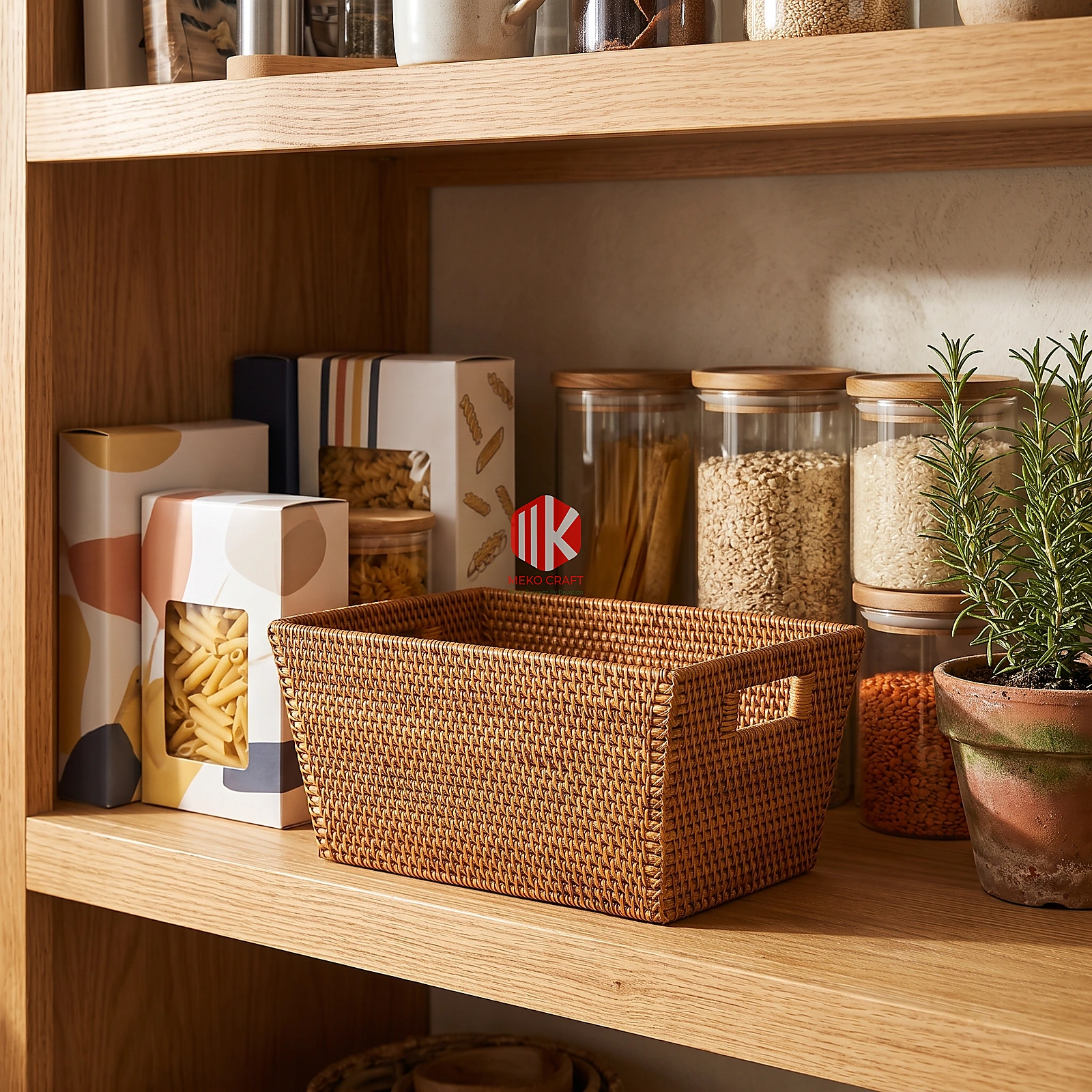
 Handwoven Tapered Rattan Rectangular Storage Basket
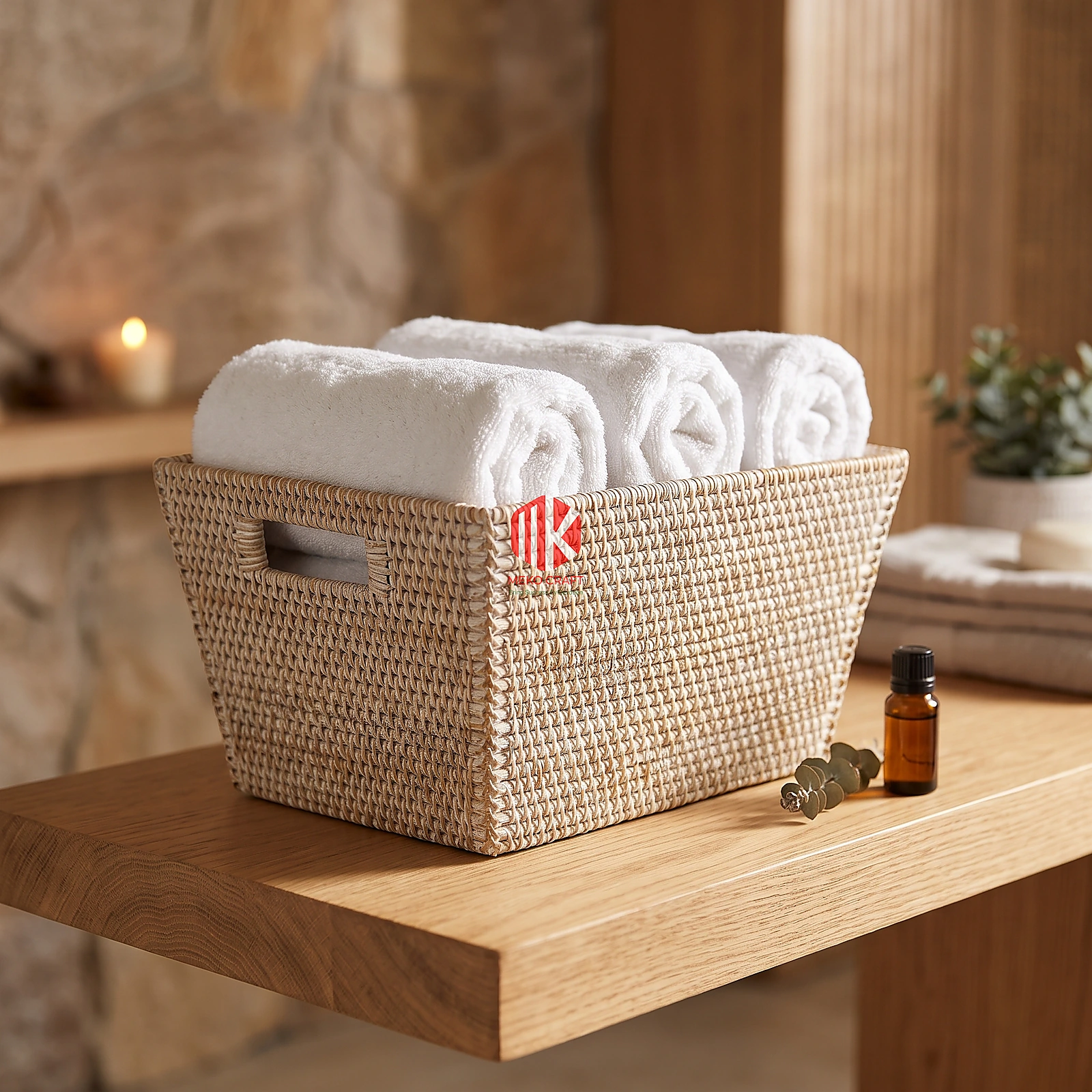
- Fine Woven Rattan Rectangular Storage Basket
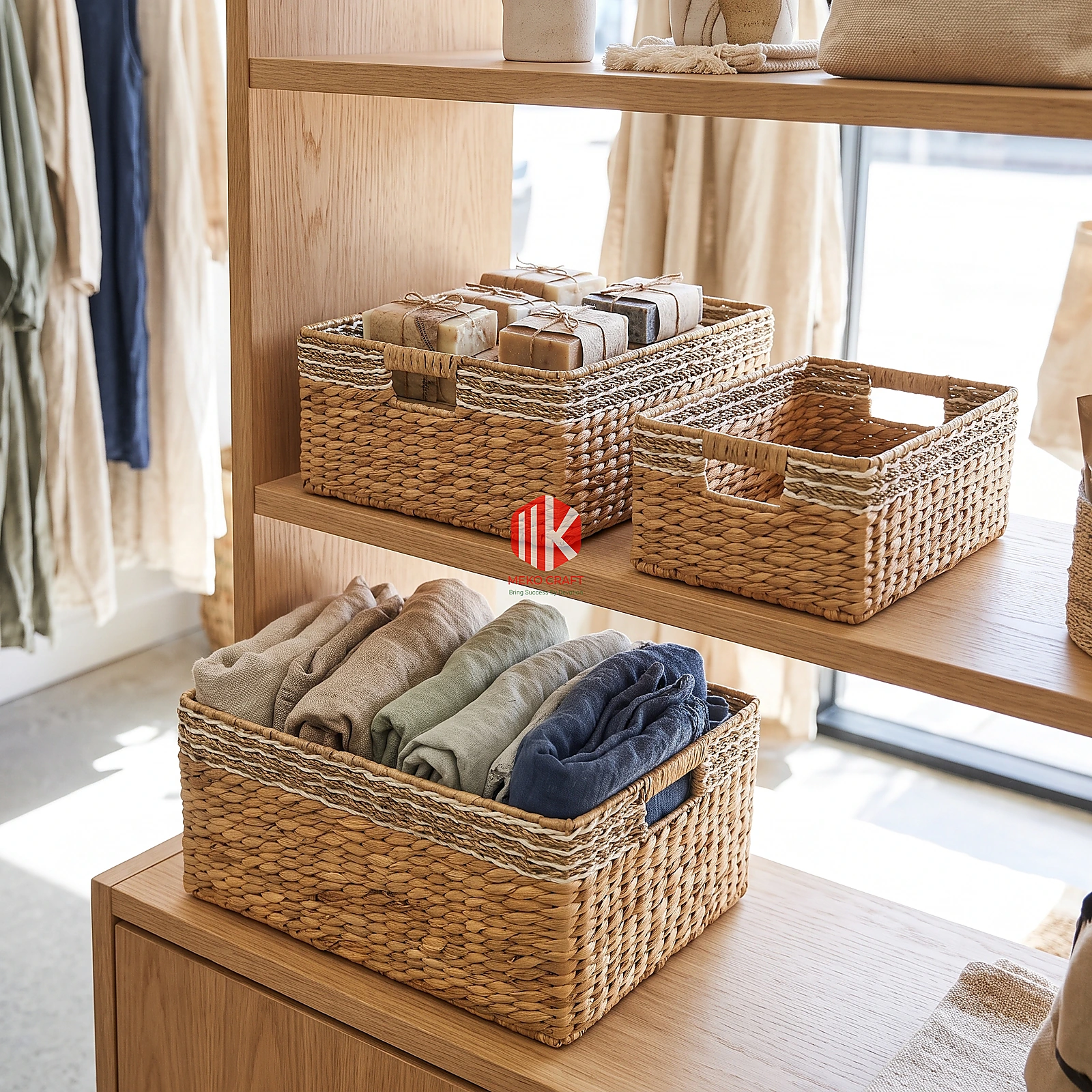
- Braided Water Hyacinth Rectangular Storage Basket Set of 3
Frequently Asked Questions
Why do natural fiber baskets get mold during sea freight?
Natural fibers absorb moisture. If not dried sufficiently before packing, this trapped moisture can condense inside a sealed shipping container due to temperature changes during a long sea voyage, creating conditions for mold growth. Even a small amount of residual moisture is enough for spores to activate.
How does Meko Craft prevent mold on its products?
We sun-dry and kiln-dry every piece until moisture is below 15%. Before packing, we use a moisture meter to check products. Finished goods are stored away from damp areas, and any piece that gets wet is dried again. Products are packed in 5-layer cartons with silica gel, and shipments are fumigated.
What should buyers look for in a supplier’s mold prevention process?
Buyers should ask about drying methods (sun-drying, kiln-drying), target moisture content, use of moisture meters, packing materials (silica gel), storage conditions, and quality control steps. It’s also important to confirm fumigation is included and if a phytosanitary certificate can be provided when required.
What can buyers do in their own warehouse to prevent mold?
Upon arrival, unpack and ventilate products. Store them in a dry, climate-controlled warehouse with good air circulation, using pallets to keep items off the floor. If any product gets wet, dry it fully in the sun or a warm, airy place before storing it to prevent mold spread.
About Meko Craft
Meko Craft makes handwoven home decor in water hyacinth, seagrass, rattan, bamboo and palm leaf. Our factory is in Thuan Giao Ward, Ho Chi Minh City, and our own weaving workshops are in Dong Thap and Hau Giang in the Mekong Delta. Samples take 7-10 days, production 55-60 days, and the MOQ is 100-150 pieces per design. See our factory or send us an inquiry.
