

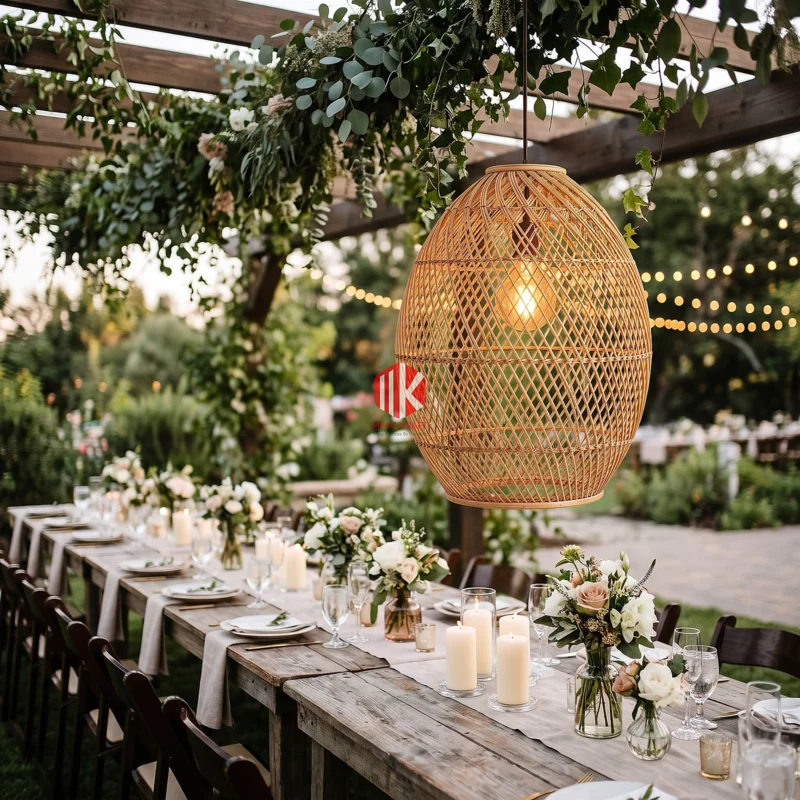
Buying rattan pendant lamp shade wholesale requires a clear understanding of material grades, weaving techniques, and moisture control. For importers and hospitality buyers, the goal is to source products that maintain their shape and remain free of mould throughout a long sea voyage. At Meko Craft, our management and production team has over 20 years of experience making handwoven home decor for B2B buyers, focusing on the technical details that ensure durability in international markets.
The manufacturing process for Lamp Shades involves several stages of preparation before weaving begins. We start with raw rattan fibre, which carries HS code 460100. This material is sorted by diameter, where thick poles are used for frames and fine strands are used for surface weaving. To keep shapes consistent across a large order, we shape the rattan over a mould. This locks the frame and curves into place before the final assembly. Because rattan can snap if it is too dry, we steam the material to reach 60-70% humidity before shaping the frames. Once the parts are ready, they are assembled into the final piece, which exports under HS code 460212.
Choosing Between Rattan, Bamboo, and Seagrass
Professional buyers often choose between different natural fibers based on the desired light effect and the environment where the shade will be used. While rattan is the most common choice for structured shapes, bamboo and seagrass offer different functional benefits. For example, we use bamboo poles that are around 3 years old. This age is specific because younger bamboo tends to shrink and crack after weaving, which can ruin the lamp shade’s structure. Bamboo is light yet rigid, making it suitable for larger frames.
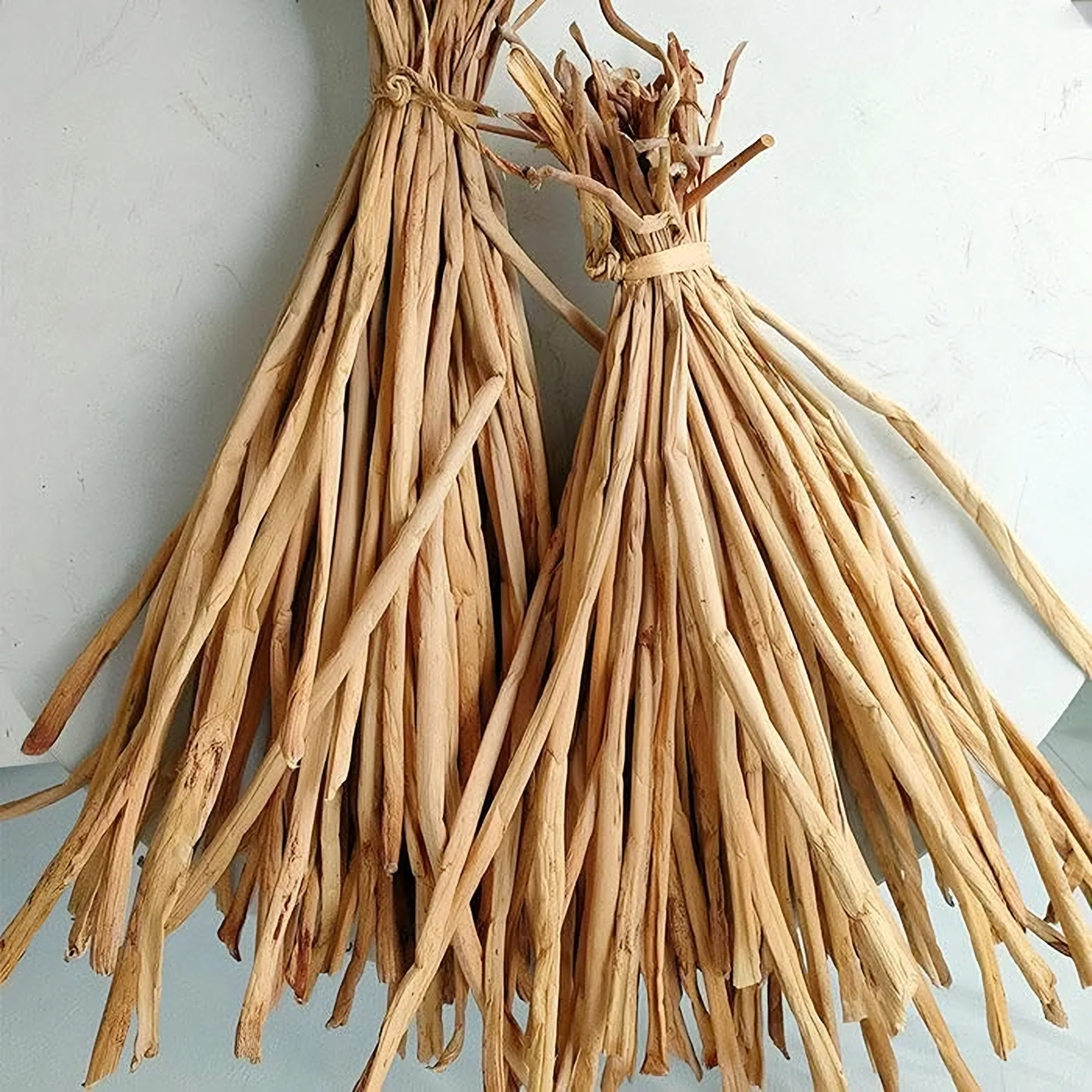
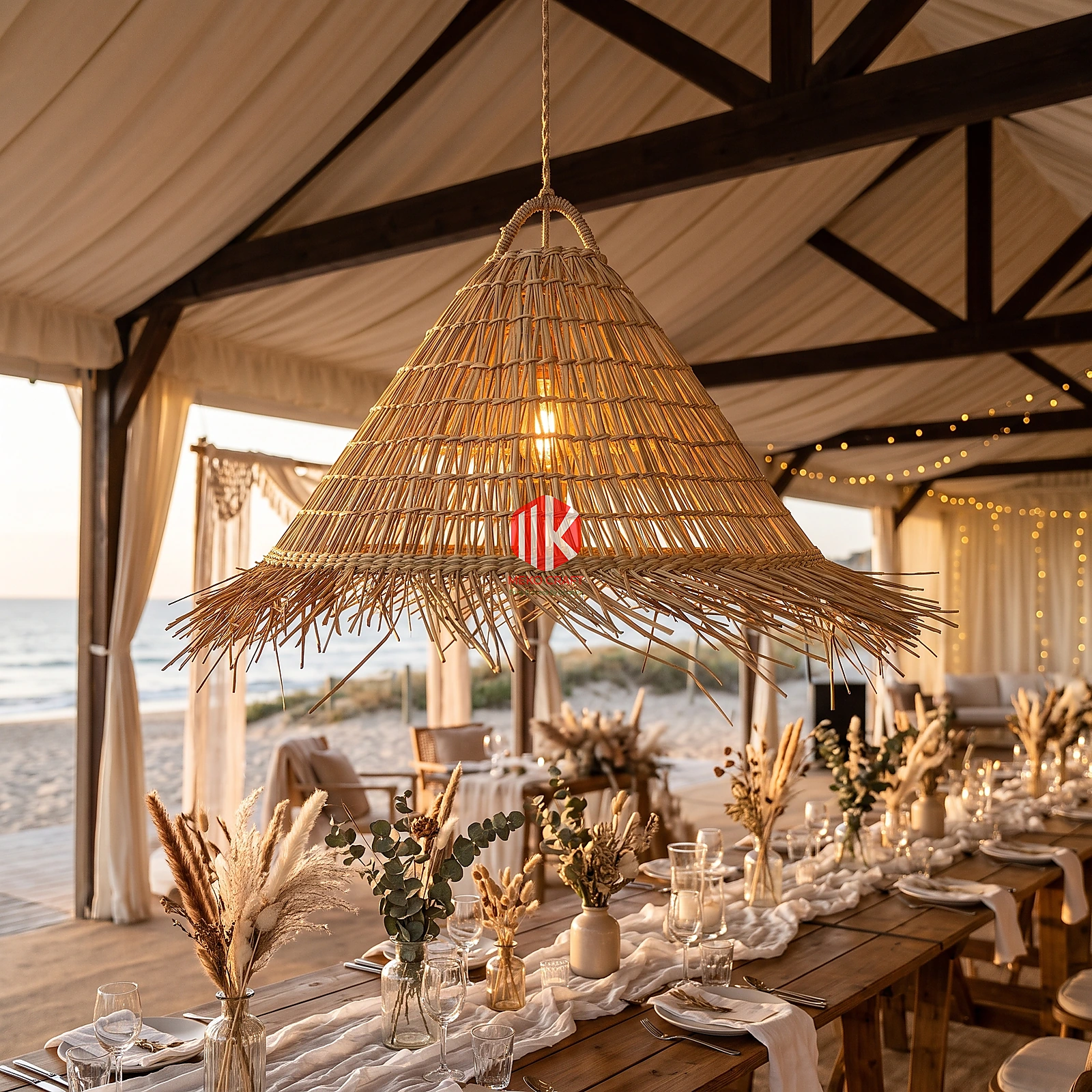
Seagrass is another option, known for being tougher and more moisture-resistant than materials like water hyacinth. We grade seagrass cords by thickness, using fine cords for detailed patterns and thick cords for structural support. An example of this application is the Open Lattice Seagrass Conical Pendant Light Shade with Fringed Edge, which uses the natural flexibility of the fiber to create a rustic rim. Unlike rattan, seagrass does not require steaming but still needs careful drying to prevent issues during transit.
| Material | Key Property | Typical Application |
|---|---|---|
| Rattan | Flexible when steamed | Complex curves and globe shapes |
| Bamboo | Light and rigid | Large frames and wall hangings |
| Seagrass | Moisture-resistant | Detailed patterns and textured rims |
Weaving Patterns and Light Effects
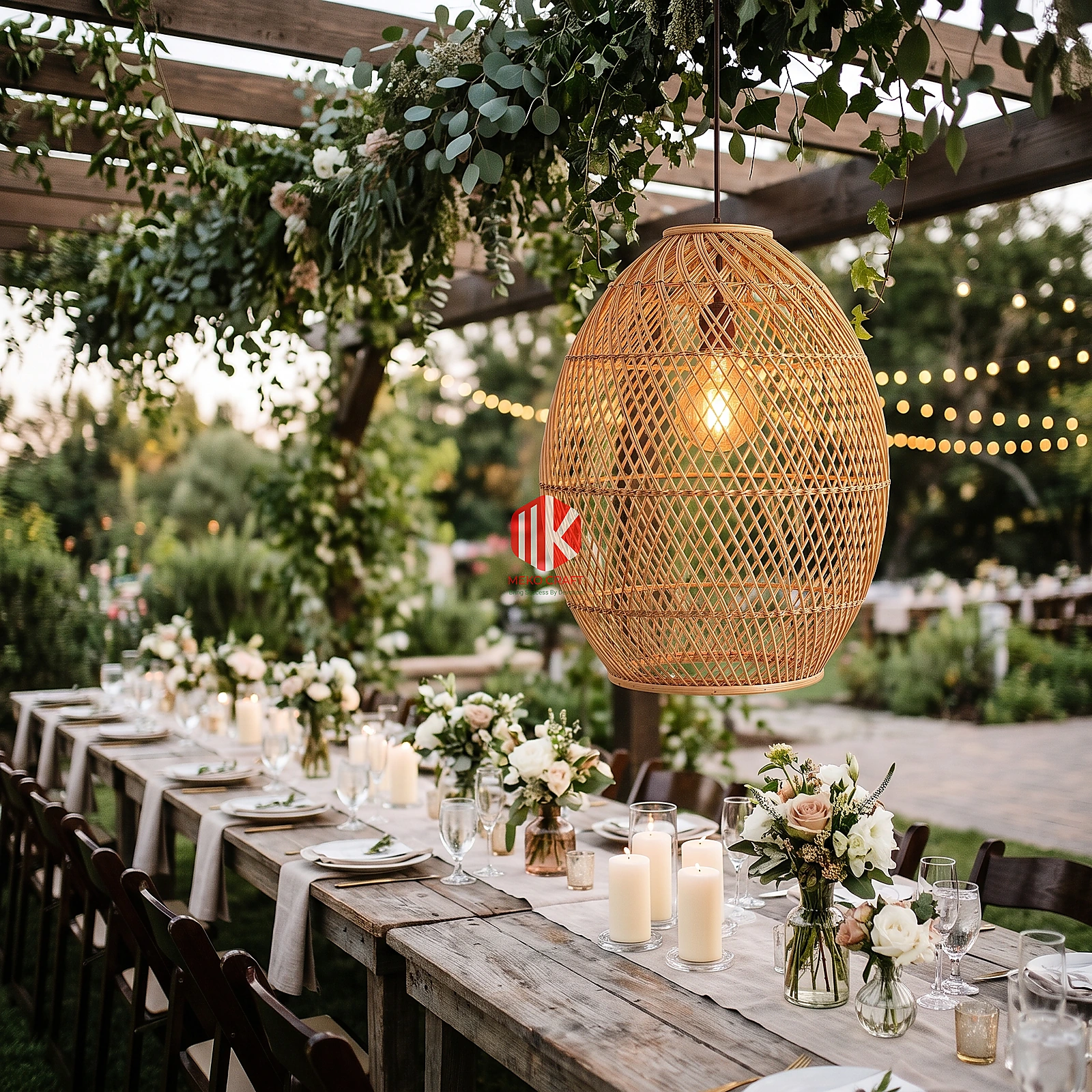
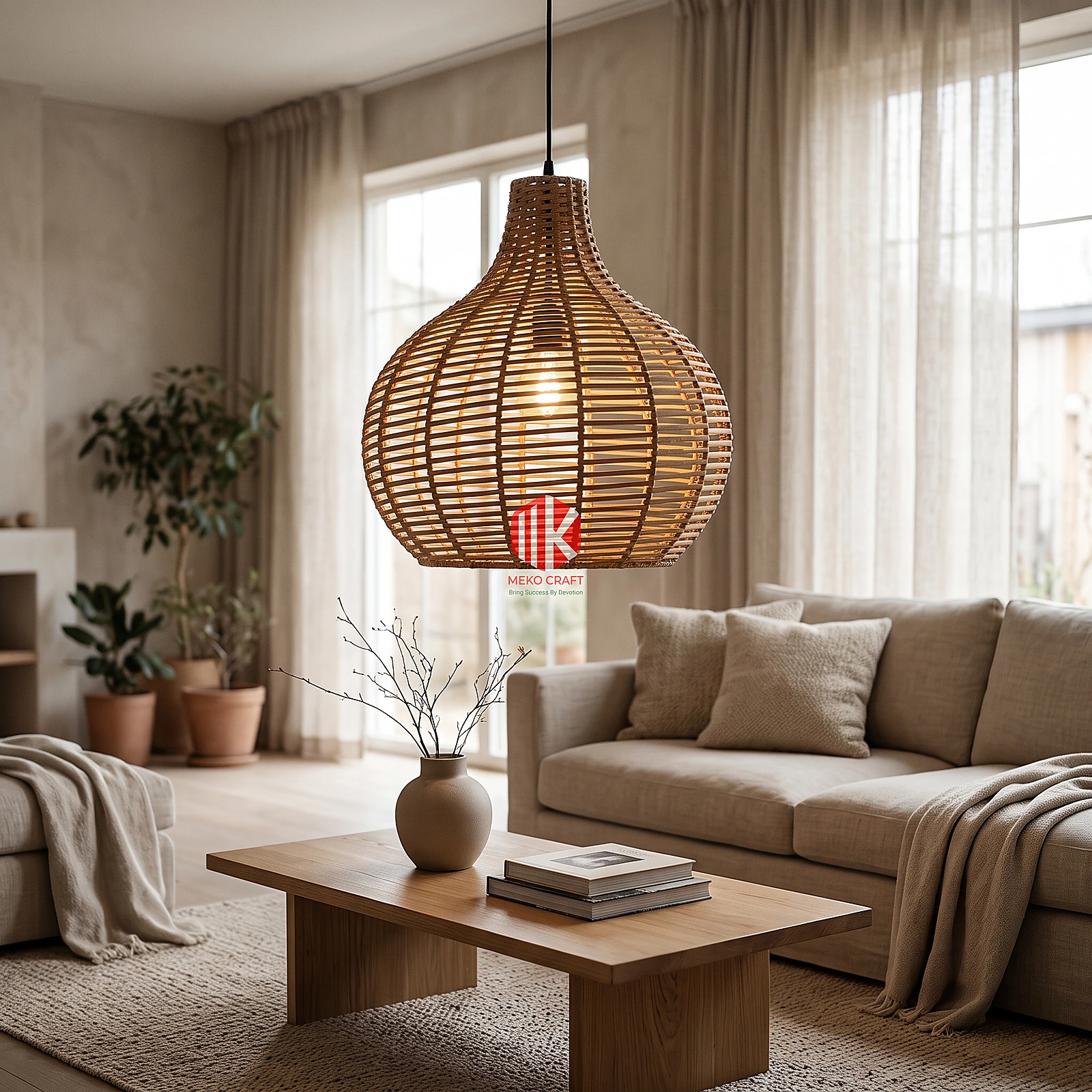
The weave pattern determines how light and shadow interact within a space. In hospitality projects, designers often look for patterns that cast specific shadows on walls. An open diamond weave, such as the one found on the Handwoven Open Diamond Rattan Globe Pendant Lamp Shade, allows for high light output while maintaining a clear geometric shadow. For a more diffused light, a tighter horizontal weave is often preferred. The Open Lattice Teardrop Rattan Pendant Light Shade provides a balance between these two, offering an architectural shape with an open structure that suits ambient lighting.
Every piece is hand-woven by artisans in Vietnam’s Mekong Delta. We run our own weaving workshops in Dong Thap and Hau Giang, where the natural fibers are sourced. For larger orders, we work with partner weavers in craft villages, which allows us to scale up to 1,000 weavers in total. It is important for buyers to note that small variations between pieces are normal in handweaving. These are not defects but a result of the manual process used to create each shade.
Quality Control and Moisture Management
The biggest risks in the export of woven goods are moisture and loose weave ends. We solve these issues through a strict quality management process that runs through seven stages. This includes incoming quality control (IQC) on raw materials, process quality control (PQC) during weaving, and final quality control (FQC) before shipping. Every piece gets a 7-point check before it moves to the packing area.
Moisture control is a constant focus at our factory in Thuan Giao Ward, Ho Chi Minh City. Our facility includes a 1,000 sqm indoor workshop and a 1,500 sqm outdoor drying yard. Every product is sun-dried and heat-dried thoroughly to prevent mold. Before packing, we check the moisture of the products with a moisture meter to ensure they meet export standards. Finished goods are stored away from damp areas, and any piece that gets wet during the process is dried again before it is placed in a carton. We pack products in 5-layer (5-ply) corrugated export cartons with silica gel to maintain a dry environment during the weeks at sea.
Steps for Sourcing Rattan Pendant Lamp Shade Wholesale
- Identify the required material (rattan, bamboo, or seagrass) based on the project environment.
- Determine if a standard design or a custom drawing is needed for production.
- Request a sample to verify weave quality and frame consistency (samples take 7-10 days).
- Confirm the MOQ, which is typically 100-150 pieces per design.
- Plan for a production time of 55-60 days from the date of sample approval.
- Ensure the order includes a fumigation certificate to meet import quarantine rules.
Developing Custom Designs from Drawings
Buyers can modify an existing design or send their own drawings for us to develop. When we receive a drawing, we first determine the best material grade and whether a steel frame or a pure rattan frame is necessary. Some designs are woven over a welded steel frame for extra stability, while others are built from rattan alone. After the weaving is complete, we trim, clean, and dye each piece to its final color. This customization process allows brands to create unique lighting collections that stand out in the market.
Our production capacity is over 10,000 pieces per month, supported by more than 50 skilled artisans at the factory and our network in the Mekong Delta. Once the container is loaded, the whole shipment is fumigated. This is a required step that kills any insects or eggs and meets the quarantine rules of importing countries like the USA, Japan, and those in Europe. We also provide TÜV SÜD test reports for heavy metals on request, and our factory can meet BSCI or SA8000 audit requirements if your project requires social compliance documentation.
To maintain the quality of the shades after they arrive, buyers should keep the products in a dry place. If a product gets wet during local transport or display, it should be dried fully in the sun or a warm, airy place before being stored. This simple step prevents the natural fibers from weakening or developing surface issues over time. If you are ready to discuss a specific project or need a quote for a bulk order, please contact our team to start the sampling process.
From Our Workshop
 Open Lattice Seagrass Conical Pendant Light Shade with Fringed Edge
- Handwoven Open Diamond Rattan Globe Pendant Lamp Shade
- Horizontal Weave Bulbous Rattan Pendant Lamp Shade
Frequently Asked Questions
What is the standard production time for a wholesale order?
Production takes 55-60 days, counted from the time the sample is approved until the goods are ready. This timeframe covers the weaving, drying, and quality control stages. It does not include the time required for shipping or the initial 7-10 days needed to create a sample.
How do you ensure the lamp shades do not arrive with mold?
We use a multi-stage drying process involving both sun-drying and heat-drying. Before packing into 5-ply cartons with silica gel, we check every piece with a moisture meter. We also ensure all finished goods are stored in dry areas and re-dry any items that encounter moisture before they are packed for export.
Can I provide my own design for a rattan lamp shade?
Yes, buyers can send their own drawings or modify existing designs. We use these drawings to create a sample in 7-10 days. We often use moulds to ensure that the custom shape remains consistent across the entire production run of 100-150 pieces or more.
What documentation do you provide for international shipments?
We provide a fumigation certificate for all export shipments to meet quarantine rules. A phytosanitary certificate can be issued if required by the buyer or the importing country. Additionally, TÜV SÜD test reports and BSCI or SA8000 audit compliance are available upon request.
About Meko Craft
Meko Craft makes handwoven home decor in water hyacinth, seagrass, rattan, bamboo and palm leaf. Our factory is in Thuan Giao Ward, Ho Chi Minh City, and our own weaving workshops are in Dong Thap and Hau Giang in the Mekong Delta. Samples take 7-10 days, production 55-60 days, and the MOQ is 100-150 pieces per design. See our factory or send us an inquiry.

Sourcing these products for your business?
Get our wholesale catalog with MOQ, materials and lead times, or ask for an FOB quote.
More guides for buyers
How to Order Samples from a Basket Manufacturer
Seasonal Home Decor: Planning Your Sourcing Timeline
What Affects the Price of Wholesale Water Hyacinth Baskets
How to Prevent Mold on Woven Baskets in Sea Freight